





How long can a baby be in a car seat?
Quick answer
How long can a baby be in a car seat? East Lancashire Hospitals NHS Trust advises no more than two hours at a time, with breaks on longer journeys. Newborns may need shorter trips. The Lullaby Trust says there’s no published evidence setting out an exact time limit. Follow your baby’s healthcare team’s advice and take them out when you arrive. [2] [1]
You’ve packed the changing bag and finally got everyone ready to leave. Then a thought stops you. Was the advice to take your baby out of their car seat after 30 minutes, or was it two hours? When you’re heading to see the grandparents, that’s quite a difference. So which advice should you follow, and when should you plan a break?
How long can a baby stay in a car seat?
- Stop for breaks. East Lancashire Hospitals NHS Trust recommends no more than two hours in the seat at a time. Take your baby out during stops, and stop sooner if they need you. [2]
- Keep early journeys short. The Lullaby Trust advises avoiding long drives with very young or premature babies. Ask your maternity or neonatal team about any journey you’re unsure of. [1]
- Keep checking on your baby. Derbyshire Family Health Service advises a second adult in the back where possible, or a mirror if you’re travelling alone. [11]
- Take them out when you arrive. NHS advice is to move your baby out of the car seat at your destination, even if they’ve fallen asleep. [12]
Why do some guides say two hours and others 30 minutes?
The two-hour recommendation appears in East Lancashire Hospitals NHS Trust’s advice. You’ll also see RoSPA’s advice about drivers taking a break every two hours mentioned. That recommendation is about driver tiredness, so it doesn’t establish a safe time limit for a baby.
A small Bristol study reported in 2016 looked at babies in car seats during 30-minute tests, including simulated car movement. Researchers saw changes in breathing and oxygen levels and called for more research. Those 30-minute tests didn’t establish a safe travel time for every baby.
Some NHS teams give shorter limits. For example, Leeds Teaching Hospitals advises no longer than 30 minutes. If your own midwife or neonatal team recommends that, use it to plan your stops.
What about the first few journeys with a newborn?
Before the first drive, give yourself time to get familiar with the seat. The NHS recommends practising fitting it before your baby is born. It’s one less thing to work out on the day you leave hospital.
If you live a long way from the hospital, ask your maternity team about the journey before you go home. They can advise you about your baby, particularly if they were premature or have any health needs.
Having family visit you can make those early weeks easier. If you need to travel, leave plenty of time for stops and feeding.
If your baby slumps forward, stop safely and take them out. Derbyshire Family Health Service advises stopping straight away if this happens. Park before repositioning your baby or adjusting the harness. [11]
What if your baby falls asleep in the car?
The NHS says it’s OK for your baby to fall asleep while travelling. Once you’ve arrived, take them out and settle them into a suitable sleep space, even if moving them might wake them. [12]
That could be a cot, Moses basket or suitable carrycot. NHS safer sleep advice is to put your baby on their back, on a firm, flat mattress, with the sleep space clear. Keep them in the same room as you for at least the first six months. [12]
Our Peach 8 carrycot is suitable for overnight sleeping when used according to its instructions and safer sleep guidance. You can read more through our partnership with The Lullaby Trust.
Should you stop to feed your baby?
Yes. Find somewhere safe to stop, park and take your baby out for their feed. You can then wind them, change their nappy and give them a little time out of the seat before setting off again.
The American Academy of Pediatrics advises never breastfeeding in a moving car. NHS guidance also says babies must be properly restrained while travelling. [3] [4]
Does time on the pushchair count too?
It does. If you’ve driven somewhere and then clicked the car seat onto your pushchair, your baby is still spending that time in the same seat. A drive followed by shopping and lunch can add up, so take a carrycot or suitable pushchair seat for a longer outing.
The NHS advises that young babies need a pushchair seat that fully reclines so they can lie flat. Check which car seats fit your iCandy pushchair, including the adaptors you’ll need. Read the NHS advice on pushchairs and travel systems.
Does the advice change as your baby gets older?
Even when your baby can hold their head up or sit by themselves, keep taking regular breaks. Your seat’s instructions and any advice from your baby’s healthcare team still apply. [11]
| Age | What to bear in mind |
|---|---|
| Newborn | Keep journeys short. Ask your maternity team about a longer drive, including the trip home. |
| Around 3 months | Keep taking breaks and checking how your baby is sitting in the seat. |
| Around 6 months | Good head control doesn’t change the advice about taking breaks. |
| 9 to 12 months | Continue regular stops and check the seat’s height and weight limits as your baby grows. |
Planning a longer drive with your baby
Give yourself more time than the route planner suggests. Feeding, changing and getting everyone back into the car can make a stop take longer than it used to.
| Your journey | Before you go |
|---|---|
| A short local trip | Have somewhere suitable for your baby to sleep when you arrive. Take them out of the seat at your destination. [12] |
| A longer drive | Plan stops at least every two hours, following East Lancashire Hospitals NHS Trust’s advice, and sooner if needed. [2] |
| Your newborn’s first journey | If it’s a long drive, ask your maternity team about it before you leave hospital. |
- Look up places to stop. Choose somewhere you can park safely, take your baby out and feed or change them.
- Check on your baby as you travel. Derbyshire Family Health Service suggests a second adult in the back, or a mirror if you’re alone. Keep your attention on driving and stop safely if you’re concerned. [11]
- Remove bulky coats and snowsuits. RoSPA advises keeping harness straps flat and close to your baby’s body. Follow the seat’s instructions when adjusting them. [5]
- Check they’re comfortable. NHS advice is to remove hats in the car and feel your baby’s chest or the back of their neck to check for overheating. [12]
- Keep the changing bag easy to reach. Put nappies, wipes, spare clothes and feeding supplies where you can get to them once parked.
RoSPA recommends choosing a seat that fits your child and your car. For height-based R129 seats, UK law requires rear-facing travel until your child is over 15 months. Follow the seat’s height and weight limits and fitting instructions. [5] Check the UK car seat rules.
Choosing a car seat for everyday use
Start with a seat that fits your baby and your car, then think about lifting your baby in and out. A rotating car seat can make reaching the harness easier. A removable carrier helps with getting from the car to the door.
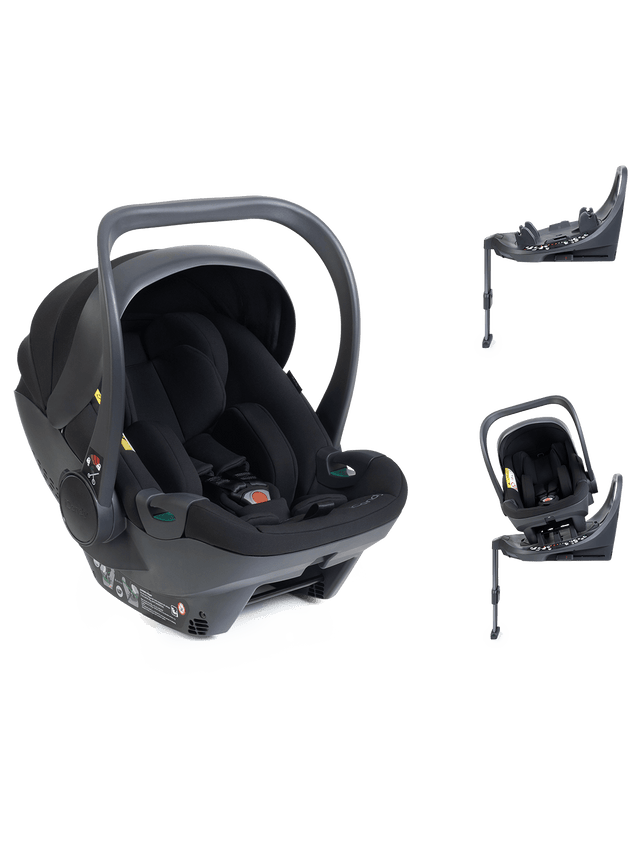
Cocoon 360 car seat and base
Our i-Size Cocoon 360 carrier weighs 4.2kg and lifts off its rotating base. It’s approved to UN R129/04 for babies measuring 40 to 87cm and weighing up to 13kg. Follow the Cocoon 360 instructions, including the rear-facing travel position.
Explore Cocoon 360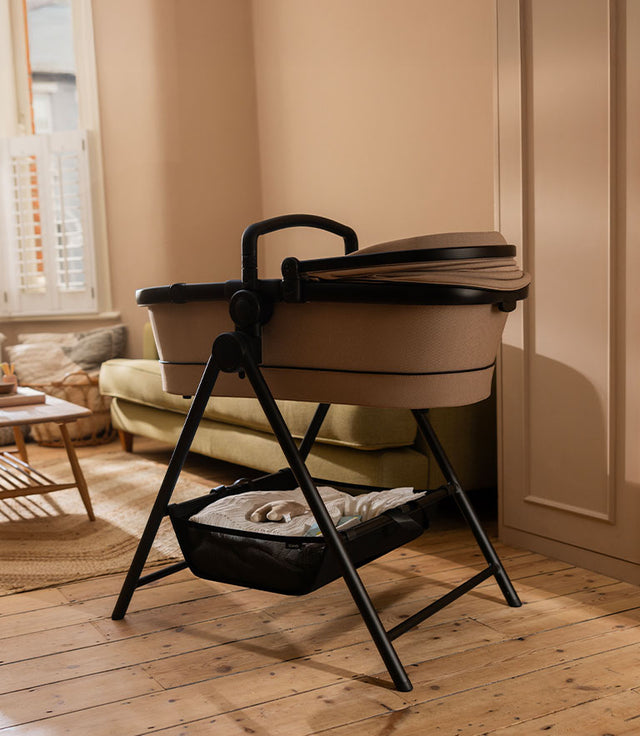
A carrycot for when you arrive
If you use a compatible iCandy carrycot, the MiStand gives you somewhere to place it at home or when visiting family. It works with the Peach 8 carrycot when used according to the product instructions.
Explore MiStand
A few more questions
How long can a baby be in a car seat?
East Lancashire Hospitals NHS Trust advises no more than two hours at a time, with breaks. Some maternity teams give shorter limits, particularly for newborns. Follow your own team’s advice. [2] [7]
What is the 30-minute car seat rule?
Some NHS teams, including Leeds Teaching Hospitals, advise no longer than 30 minutes. A Bristol study also used 30-minute tests, but those tests didn’t establish a safe journey length for every baby. [7] [6]
What is the two-hour car seat rule?
East Lancashire Hospitals advises taking your baby out for a break at least every two hours. Stop sooner if they need a feed, a change or repositioning. [2]
Does time in the car seat on a pushchair count?
Yes. Your baby is still in the same seat, so include that time when planning breaks. Bring a suitable carrycot or pushchair seat if you’re going to be out for longer.
How long should a six-month-old be in a car seat?
Keep following NHS advice on regular breaks, even if your baby can hold their head up well. Getting older doesn’t mean they can stay in the seat for longer without a break. [11]
Can my baby sleep in a car seat overnight?
No. The Lullaby Trust advises moving your baby to a firm, flat sleep surface when you arrive. Settle them into a suitable cot, Moses basket or carrycot, even if they fell asleep on the way. [1]
Should I stop to feed my baby?
Yes. Park somewhere safe and take your baby out to feed, wind and change them. They need to stay properly restrained whenever the car is moving. [3] [4]
Can I drive home from hospital with my newborn?
Use a correctly fitted rear-facing seat suitable for your baby. If you have a long drive home, or your baby has additional health needs, ask your maternity or neonatal team about the journey before you leave. Read the NHS advice.
You can browse our newborn car seats and car seats and bases online. For safer sleep advice, visit our page about The Lullaby Trust.
Sources
- The Lullaby Trust car seat factsheet (PDF)
- East Lancashire Hospitals NHS Trust, keeping your baby safe
- American Academy of Pediatrics, travelling with a baby
- University Hospitals Coventry and Warwickshire, care for babies after birth (PDF)
- RoSPA, choosing and using child car seats
- Bristol pilot study, Archives of Disease in Childhood and University of Bristol research summary
- Leeds Teaching Hospitals, My Maternity Journey
- RoSPA, driver fatigue and breaks
- GOV.UK, child car seat rules
- NHS, what you will need for your baby
- Derbyshire Family Health Service, keeping babies and children safe
- NHS, safer sleep and overheating advice


