Everything you need to know about prams for newborns

Everything you need to know about prams for newborns

| Updated |5 |Accessories & Care|Newborn|Guide|Home and Nursery|How to|Pip|Tips and Tricks|travel|Travel Strollers
Quick Answer

When choosing a pram for a newborn, look first for a setup that the manufacturer explicitly confirms is suitable from birth. For many families, that means a carrycot that gives baby a spacious, completely flat place to lie. A pushchair seat can also be suitable for a newborn if the manufacturer specifically approves it for use from birth in its newborn configuration. Beyond that, compare the fold, weight, wheels, suspension, storage, car-seat compatibility and whether the pushchair can adapt as your family grows.

✓
Newborn sleep guidance matters when choosing a pram The Lullaby Trust recommends placing babies on their backs in a clear, firm and flat sleep space. If you want a pram carrycot to double as an overnight sleep space, check that the manufacturer specifically confirms it is suitable for that use. Read The Lullaby Trust's safer sleep guidance .

If you're researching prams for newborns for the first time, the amount of terminology can make a fairly simple purchase feel surprisingly complicated. You'll come across prams, pushchairs, carrycots, lie-flat seats, travel systems, car-seat adaptors and dozens of individual features before your baby has even arrived.

The easiest way to choose is to start with what a newborn actually needs, then work out which pushchair best fits your own everyday life.

This guide covers everything you need to know about prams for newborns, including what makes a pushchair suitable from birth, whether you need a carrycot, when a baby can move into the seat unit, how travel systems work and which practical features are worth comparing before you buy.

From birth Choose a manufacturer-approved newborn setup
Carrycot A spacious, completely flat newborn option
Sleep Check overnight-sleep suitability separately
Daily life Test the fold, weight, steering and storage
Parent walking with a newborn in an iCandy pram carrycot
Start with the terminology

What is the difference between a newborn pram, pushchair and travel system?

The terms are often used interchangeably, but there are some useful distinctions when you're shopping for a newborn.

Pram Traditionally built around a carrycot A pram usually refers to the flat newborn configuration, with a carrycot attached to the chassis so baby can lie completely flat.
Pushchair The wider system used as baby grows A pushchair normally includes a seat unit for later stages. Some modern pushchair seats are also explicitly suitable from birth when used in their specified newborn position.
Travel system Multiple compatible components on one chassis A travel system usually combines a pushchair chassis with a carrycot, seat unit and the option to attach a compatible infant car seat using the correct adaptors.
Buying your first pram

What should you look for in a pram for a newborn?

The best pram for a newborn isn't necessarily the one with the longest specification sheet. These are the features most likely to matter once you're using it every day.

01

A setup explicitly suitable from birth

Don't assume that every reclining pushchair is suitable for a newborn. Check that the manufacturer specifically confirms the carrycot or seat configuration can be used from birth.

02

A completely flat newborn position

A carrycot gives a newborn a dedicated flat environment. If you're considering a pushchair seat instead, check the exact newborn instructions rather than assuming that a deep recline is the same as a from-birth configuration.

03

Suspension and wheels that suit your routine

Think about where you'll actually walk. Smooth pavements, city streets, parks, gravel and uneven paths place different demands on wheels, suspension and steering.

04

A fold you can live with

Try folding the pushchair yourself. Check the folded chassis against your car boot and think about where the chassis and carrycot will live at home.

05

Useful everyday storage

Nappies, spare clothes, changing essentials and shopping quickly turn the basket into one of the most-used parts of a newborn pram.

06

Long-term adaptability

If you expect your family to grow, consider whether the same pushchair can convert from single to double or support an older sibling with a Ride-on Board later on.

One of the biggest newborn-pram questions

Does a newborn need a carrycot in a pram?

Not every newborn pushchair requires a separate carrycot. What matters is that the exact configuration is approved by the manufacturer for use from birth.

Why choose one? A dedicated newborn environment A carrycot gives your baby a spacious, completely flat place to lie while you're out and can be particularly practical for longer walks, visits and naps.
Is it essential? Not if the seat is genuinely suitable from birth Some pushchairs use a seat that the manufacturer explicitly approves for newborn use. The iCandy Pip, for example, has a lie-flat seat suitable from birth without requiring a separate carrycot.
For sleep Check overnight suitability separately Being suitable for a newborn walk does not automatically make every carrycot or pushchair configuration suitable for routine overnight sleep. Follow the instructions for the exact product.
For convenience Think about how you'll use it away from the chassis Features such as carry handles, folding carrycots and compatible stands can make a carrycot more useful at home and while travelling.
Prams for newborns and safer sleep

Can a newborn sleep in a pram carrycot?

A carrycot can provide a suitable sleep space when it meets safer-sleep principles and the manufacturer confirms that the specific product is suitable for that type of sleep. Always follow the instructions supplied with the carrycot.

Keep baby flat and on their back Place your baby on their back for sleep on the supplied firm, flat mattress.
Keep the sleep space clear Don't add pillows, sleep positioners, nests, toys, extra mattresses or unnecessary soft padding to the carrycot.
Check overnight approval Only use a carrycot for overnight sleep when its manufacturer specifically confirms it is designed for that purpose.
Moving beyond the newborn stage

How long does a baby use the carrycot on a pram?

There isn't one universal age at which every baby should leave a carrycot. The correct transition point depends on the limits for the specific product and your baby's development.

Follow the manufacturer's limit Check the maximum weight, size and developmental limits in your carrycot instructions. These take priority over a general age estimate.
Watch developmental milestones Some carrycots must stop being used once a baby reaches specified developmental milestones, even if they have not reached the maximum weight.
Move into the correct seat configuration When your baby has outgrown the carrycot, set up the pushchair seat according to the instructions for their age, size and development.
Don't rush the transition A more upright seat is not automatically better simply because your baby is becoming more alert. Use the carrycot for as long as the product instructions allow and it remains suitable.
Current iCandy options

Which iCandy prams and pushchairs are suitable for newborns?

The right choice depends on whether you want a traditional carrycot setup, a premium single pushchair, future single-to-double flexibility or something much more compact.

Premium & future-proof

Peach 8

Peach 8 is suitable from birth with its carrycot and can convert from single to double or twin on the same footprint. Its collapsible carrycot provides more than 1,300cm² of ventilation and is suitable for permanent overnight sleeping.

Explore Peach 8
Premium single

Core 2

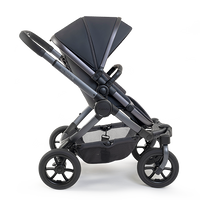
Core 2 is a strong choice if you want a premium single pushchair rather than a full single-to-double system. Its fleece-lined, ventilated carrycot is suitable from birth and for overnight sleeping.

Explore Core 2
Growing families

Orange 4

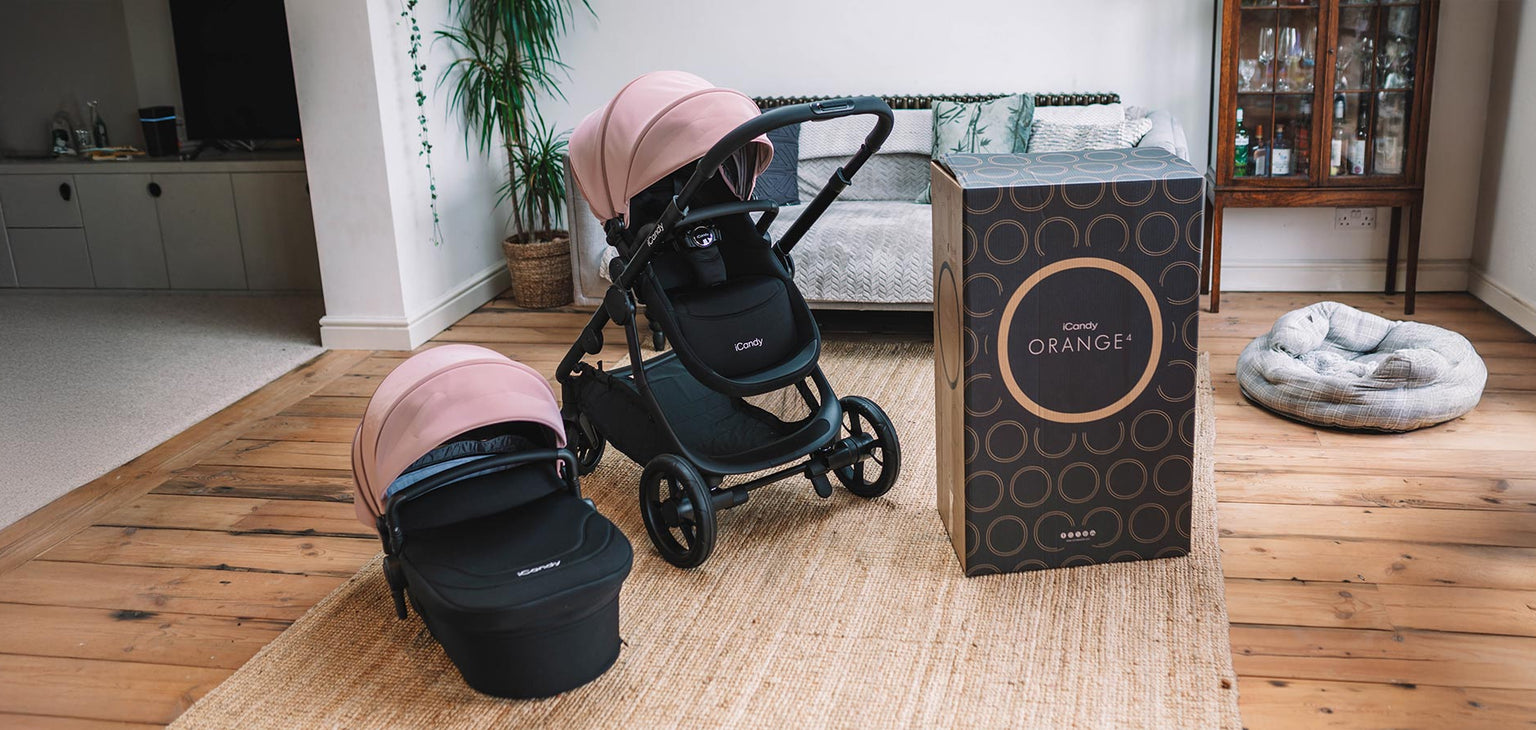
Orange 4 is single-to-double ready and has a fleece-lined carrycot suitable for permanent overnight sleeping. Its wider system provides more than 30 configurations for changing family needs.

Explore Orange 4
Compact from birth

Pip

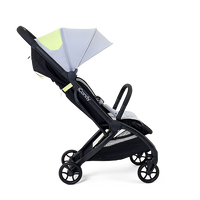
Pip offers a different approach to newborn travel. Its lie-flat seat is suitable from birth, so families looking for a lightweight, compact pushchair can use it without adding a separate carrycot.

Explore Pip
iCandy Core 2 pram with carrycot suitable for a newborn
Buy for the life you'll actually live

How should your lifestyle influence the newborn pram you choose?

City living Think width, weight and manoeuvrability If lifts, public transport, cafés and smaller hallways are part of everyday life, pay close attention to chassis width, turning circle, folded size and how easy the pushchair is to lift.
Car journeys Check the whole newborn setup in your boot Remember that a carrycot often travels separately from the folded chassis. Make sure both fit alongside changing bags, shopping and anything else you regularly carry.
Parks & mixed terrain Look closely at wheels and suspension Larger capable wheels and good suspension become more important if your regular routes include grass, gravel and uneven paths as well as smooth pavement.
Growing family Consider what happens after baby number one A pushchair that converts into a double or has an integrated Ride-on Board may extend the useful life of the system if you expect another child later.
Prams, car seats and travel systems

What is a travel system for a newborn?

A newborn travel system allows compatible components to work with the same pushchair chassis. That normally means a carrycot and seat unit, plus the ability to attach an approved infant car seat using the correct adaptors.
Check pushchair compatibility Not every car seat fits every pushchair. Use only combinations and adaptors confirmed as compatible by the relevant manufacturers.
Check vehicle compatibility The car seat must also be suitable for your vehicle and fitted according to its own instructions, whether it uses a compatible base or another approved installation method.
Remember what a car seat is for An infant car seat is designed primarily for safe vehicle travel. It should not replace your baby's normal clear, firm and flat sleep space once the journey has ended.
iCandy Orange 4 newborn pram and carrycot
Before you buy

Newborn pram buying checklist

A test drive at an iCandy stockist can tell you far more than looking at specifications alone. These are the questions worth taking with you.

For your newborn
  • Is the exact configuration explicitly suitable from birth?
  • Does the carrycot provide a completely flat position?
  • Is the mattress firm and well fitting?
  • Does the carrycot offer useful ventilation?
  • If required, is it suitable for overnight sleeping?
For everyday use
  • Can you fold the pushchair comfortably yourself?
  • Can you lift the chassis into your car?
  • Does the handle adjust comfortably for you?
  • Is the basket large enough for your normal routine?
  • Can you operate the brake easily?
For your lifestyle
  • Will it fit through your hallway, lift and regular doorways?
  • Will the chassis and carrycot fit your car?
  • Do the wheels suit your usual surfaces?
  • Does the suspension feel controlled on your normal route?
  • How much storage space will it need at home?
For the future
  • When will your baby outgrow the carrycot?
  • What is the model-specific seat weight limit?
  • Can the pushchair convert into a double if needed?
  • Is a Ride-on Board available for an older sibling?
  • Which car seats and accessories are compatible?
Common questions

Prams for Newborns FAQs

What type of pram is best for a newborn?
Choose a pram or pushchair that the manufacturer explicitly confirms is suitable from birth. Many families prefer a carrycot because it gives a newborn a spacious, completely flat environment. The best model then depends on your home, car, typical terrain, storage needs and whether you want the pushchair to adapt for another child.
Does a newborn need a carrycot in a pram?
Not necessarily. Some pushchair seats are specifically suitable from birth when used in their approved newborn configuration. A carrycot is nevertheless a popular choice because it provides a dedicated, spacious and completely flat newborn environment.
Can a newborn go straight into a pushchair seat?
Only if the manufacturer specifically states that the seat is suitable from birth and you use it in the required newborn position. Do not assume that a seat is suitable for a newborn simply because it reclines.
Do all newborn prams need to lie flat?
The newborn configuration should be the one specifically approved by the manufacturer for use from birth. For carrycots and safer sleep, the sleep surface should be firm and entirely flat rather than simply reclined or angled.
Can a newborn sleep in a pram carrycot?
Only use the carrycot for routine or overnight sleep when the manufacturer confirms that the exact carrycot is suitable for that purpose. Place your baby on their back on the supplied firm, flat mattress and keep the sleep space clear.
How long can a newborn use a pram carrycot?
Follow the limits in the instructions for your exact carrycot. The transition can depend on weight, size and developmental milestones, so there is no single age that applies to every pram. Stop using the carrycot once your baby reaches whichever manufacturer limit applies first.
When should a baby move from the carrycot to the pushchair seat?
Move to the seat once your baby has reached the stated limit for the carrycot and is ready for the next configuration specified in the pushchair instructions. Follow the product's weight, size and developmental guidance rather than relying only on age.
What is the difference between a newborn pram and a travel system?
A pram normally refers to the flat carrycot-style newborn setup. A travel system is the wider collection of compatible components that can work with one chassis, commonly including a carrycot, pushchair seat and compatible infant car seat.
Can a car seat replace the carrycot on a newborn pram?
A compatible infant car seat can be useful for short transfers as part of a travel system, but its main purpose is protecting your baby during vehicle travel. It should not replace your baby's normal firm, flat sleep space after the journey.
Which iCandy pushchairs are suitable for newborns?
Current iCandy options include Peach 8, Core 2 and Orange 4 with newborn carrycot configurations. Pip is also suitable from birth using its lie-flat seat. The setup and limits differ between models, so always check the individual product page and instructions.
Should I buy a single-to-double pram for my first newborn?
It can make sense if you expect another child while your first still regularly uses the pushchair. Peach 8 and Orange 4 can adapt into double configurations. If you expect to use only one child position, a dedicated single pushchair such as Core 2 may suit you better.
Where can I compare prams for newborns?
Browse our newborn pushchairs to compare current from-birth options, or visit an iCandy stockist to test the fold, steering, carrycot and everyday handling in person.
Your baby's first journeys

Choosing a pram for a newborn starts with the newborn setup.

Start by confirming that the pram or pushchair is genuinely suitable from birth. Then compare the things that will make the biggest difference to family life: carrycot, fold, weight, suspension, wheels, storage, car-seat compatibility and how the pushchair can adapt in the future.

The right newborn pram isn't simply the one with the most features. It's the one that gives your baby the appropriate from-birth environment while fitting naturally into your home, car and everyday routine.