



Experience|Featured|Patnership
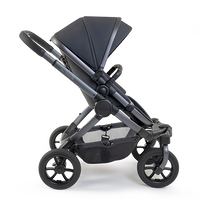
 Peach 8
The Next Generation of Peach - One Pushchair. Every Stage
Peach 8
The Next Generation of Peach - One Pushchair. Every Stage
 Core 2
From £699, our most premium single pushchair
Core 2
From £699, our most premium single pushchair
 Peach 7 Sale
Your Final Invitation to Peach 7
Peach 7 Sale
Your Final Invitation to Peach 7
 Coffee Bean
Rich coffee-brown chassis paired with warm, textured fabrics for a refined, contemporary finish.
Coffee Bean
Rich coffee-brown chassis paired with warm, textured fabrics for a refined, contemporary finish.
 Biscotti
Sophisticated nearly-nude with subtle, creamy elegant fabrics.
Biscotti
Sophisticated nearly-nude with subtle, creamy elegant fabrics.
 Coco
Espresso-brown shimmering chassis with chic tawny fabrics.
Coco
Espresso-brown shimmering chassis with chic tawny fabrics.
 Pecan
Rich and and warm materials paired with a soft pecan-brown chassis.
Pecan
Rich and and warm materials paired with a soft pecan-brown chassis.
 Peach 8 Car Seat Bundles
The ultimate travel solution, combining the luxury of Peach 8 with the safety, comfort and convenience of the Cocoon 360 car seat.
Peach 8 Car Seat Bundles
The ultimate travel solution, combining the luxury of Peach 8 with the safety, comfort and convenience of the Cocoon 360 car seat.
 Core 2 Car Seat Bundles
Experience signature iCandy quality and a complete travel solution with Core 2 and Cocoon 360 bundles.
Core 2 Car Seat Bundles
Experience signature iCandy quality and a complete travel solution with Core 2 and Cocoon 360 bundles.
 Pip Car Seat Bundles
Pip car seat bundles pair our compact travel stroller with the Cocoon 360 car seat and base for seamless journeys from day one.
Pip Car Seat Bundles
Pip car seat bundles pair our compact travel stroller with the Cocoon 360 car seat and base for seamless journeys from day one.
 Orange 4 Car Seat Bundles
Future-proof every journey with Orange 4 travel system bundles, designed to grow with your family from one child to two.
Peach 8 Bundles
Discover our Peach 8 bundles, combining award-winning luxury with everything you need for life with your little one.
Core 2 Bundles
Get everything you need from day one with Core 2 bundles, combining premium features, everyday practicality and exceptional value.
Orange 4 Car Seat Bundles
Future-proof every journey with Orange 4 travel system bundles, designed to grow with your family from one child to two.
Peach 8 Bundles
Discover our Peach 8 bundles, combining award-winning luxury with everything you need for life with your little one.
Core 2 Bundles
Get everything you need from day one with Core 2 bundles, combining premium features, everyday practicality and exceptional value.
 Orange 4 Bundles
Designed to grow with your family, Orange 4 bundles provide everything you need from day one through to life with two children.
Orange 4 Bundles
Designed to grow with your family, Orange 4 bundles provide everything you need from day one through to life with two children.
 Bags
Discover versatility and convenience with the iCandy Changing Bags.
Bags
Discover versatility and convenience with the iCandy Changing Bags.
 MiStand
Lightweight, stylish and practical, the iCandy MiStand is a versatile carrycot stand designed for seamless integration with iCandy pushchairs.
MiStand
Lightweight, stylish and practical, the iCandy MiStand is a versatile carrycot stand designed for seamless integration with iCandy pushchairs.
 Parasols
iCandy keeps your little one safe and comfortable in any weather.
Parasols
iCandy keeps your little one safe and comfortable in any weather.
 Footmuffs
Embrace cosy outings with iCandy.
Footmuffs
Embrace cosy outings with iCandy.
 Converters
Effortlessly connect your iCandy pram with our reliable pram clamps and pram adaptors.
Converters
Effortlessly connect your iCandy pram with our reliable pram clamps and pram adaptors.
 Carrycots
 can play an essential part in the first months of a baby's life, and that’s why we’ve taken such care when designing our range here at iCandy.
Carrycots
Carrycots can play an essential part in the first months of a baby's life, and that’s why we’ve taken such care when designing our range here at iCandy.
 Car Seats
Shop the iCandy Cocoon car seat, i-Size compliant and suitable from birth to 15 months. Safe, stylish, with removable insert for growing infants.
Car Seats
Shop the iCandy Cocoon car seat, i-Size compliant and suitable from birth to 15 months. Safe, stylish, with removable insert for growing infants.

Travelling with a baby is easier when you plan around the parts of the journey that create the most friction: documents, airport security, your pushchair, feeds, naps and heat. Check your airline's baby equipment and stroller policy before you fly, pack essential changing and feeding items in hand luggage and make sure your baby's passport and destination entry documents are ready. A lightweight compact stroller can simplify airport transfers, but always check your individual airline's cabin dimensions and rules before travelling.
Your first holiday with a baby can feel less like packing for a trip and more like relocating the entire contents of your house.
The reality is usually much simpler. You need the essentials that keep your baby fed, changed, comfortable and safe, plus a plan for getting through the airport and around your destination without carrying everything at once.
Whether you're flying abroad, taking a city break or heading away by car, these practical tips can help make travelling with a baby feel more manageable from the moment you leave home.

Sorting the paperwork and practical details before packing the suitcase removes some of the biggest potential problems later.
Think about what you need during the journey first. Anything you could need before your checked luggage reappears should be easy to reach.
Pack enough nappies for the journey plus extras for delays, along with wipes or cotton wool, a changing mat, nappy bags and at least one complete change of clothes.
Keep milk, bottles, baby food, snacks and anything needed for feeds somewhere accessible rather than at the bottom of the main bag.
Take a spare outfit for your baby and, if space allows, a spare top for the adult travelling with them. Babies have excellent timing.
Keep any essential medication where you can reach it and check the security and destination rules for anything that needs special storage or documentation.
A few age-appropriate books, toys or activities can help with long waits. Rotating or saving one or two familiar favourites for the journey can make them feel more interesting.
A suitable sling or carrier can be useful when your pushchair has been checked in, when boarding or anywhere you need both hands free. Use it according to the manufacturer's age and positioning guidance.

For many families, yes. A pushchair can make airports, transfers and sightseeing considerably easier, particularly when your child gets tired or you need somewhere to carry everyday essentials.
The important thing is to check your airline's rules before you travel. Policies vary: some airlines allow a stroller to be taken to the aircraft door, others may ask for it at check-in, and cabin acceptance depends on the airline's own baggage dimensions and available space.
A compact one-hand fold can make those transitions much easier, while a carry bag can help protect the stroller if it needs to travel in the hold.
Do not rely on a general rule about how many free pieces of baby equipment an airline accepts. Confirm the allowance for your exact booking before arriving at the airport.
You do not need to fill every minute of the flight. A handful of small familiar activities, snacks and changes of scene are often more useful than carrying an entire toy box.
Soft books, sensory toys and familiar songs can provide plenty of entertainment without taking up much space.
Stickers, drawing activities, favourite books or a toy they have not seen for a little while can help break a longer flight into smaller chunks.
If your child is old enough for snacks, keeping a selection of suitable favourites nearby can help during queues, boarding and longer stretches in the seat.
A delayed nap, an extra feed or a restless period does not mean the journey is going badly. Travel days are unusual days.
At UK airports, when travelling with a baby you can take enough baby food, formula milk, cow's milk or sterilised water for the journey. Breast milk is also allowed in hand luggage, subject to the current container and screening rules.
Security staff may need to screen or open containers, and the rules at airports outside the UK can be different, including on your return journey.
Check the latest UK Government baby food and baby milk guidance and the rules for every airport on your itinerary before travelling.

Hot weather can affect babies quickly, so shade, airflow and regular temperature checks matter just as much as sunscreen.
Safer-sleep principles still apply on holiday, whether you're in a hotel, villa, apartment or visiting family.
Check that the cot and mattress are in good condition and that the mattress is firm, flat and fits properly without gaps.
A carrycot may be useful away from home when it is completely flat and the manufacturer confirms that the exact model is suitable for overnight sleeping.
It is normal for babies to fall asleep during a journey, but once you arrive, move them to an appropriate firm, flat sleep surface rather than using the car seat as their main sleep space.
Avoid adding pillows, bulky bedding, folded blankets or an unapproved extra mattress to a travel cot or carrycot.
Holidays often involve more folding, carrying and switching between different types of transport than everyday life at home.
A compact stroller can be particularly useful when you're navigating airports, trains, taxis, hotel lifts and busy streets, because it takes up less space when folded and is easier to carry between journeys.
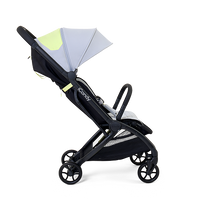
The iCandy Pip weighs 7kg and has a one-handed compact fold, carry handle, included carry bag, raincover and UPF 50+ canopy. It is suitable from birth using its lie-flat seat and supports children up to 25kg.
iCandy describes Pip as IATA cabin approved, but the final decision on cabin acceptance always sits with the airline. Check its current dimensions and stroller policy before you travel.
Explore Pip
Make sure it will meet the entry requirements for your destination for the full duration of your trip.
Check the latest foreign travel advice for your destination, including visas, health documentation and any additional entry requirements for children.
If you are taking a child abroad without another person who has parental responsibility, check whether you need their permission and what evidence you may need to carry.
Keep your travel insurance information and any relevant healthcare documentation somewhere accessible rather than only in checked luggage.
Pip is designed specifically around compact travel and everyday urban use, making it a more relevant recommendation for this guide than the discontinued Lime featured in the previous version of the article.
Travelling with a baby involves more planning, but it does not need to mean taking everything you own.
Sort the documents early, check your airline and airport rules, keep the essentials close and choose equipment that makes the transitions easier. Once those things are covered, the rest of the trip can focus on where you're actually going.


