






Pram Guide
The Ultimate Guide to Prams and Pushchairs
There are lots of factors to consider when it comes to buying a pushchair, and while this may seem like a daunting challenge at first, our expert-backed guide provides trusted insights and practical advice. With industry expertise and real parenting experience, we break down pushchair jargon to help you make the best decision for you and your baby with confidence.
Whether you use the guide in its entirety or simply dip in and out, it will help you to find the perfect pushchair for your lifestyle, budget and baby.
If you already know you want an iCandy pushchair but you're not sure which one is right for you, head over to our pushchair comparison guide.

Pram, Pushchair, Buggy, Stroller - What Is The Difference?
With so many terms used interchangeably, it’s easy to get confused. This section breaks down the key differences so you can quickly understand what each type is designed for.
What is the difference between pram and pushchairs?
Although often used as synonyms, prams and pushchairs serve different stages of your baby’s development: Prams are designed for newborns, allowing your baby to lie flat, whereas pushchairs are designed for older babies, allowing them to sit upright.

A pram allows baby to lie flat

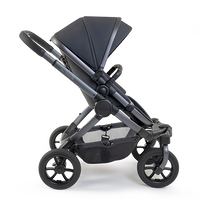
A pushchair allows baby to sit up
What is a pushchair?
A pushchair is ideal for older babies at around 6 months of age. A good way to judge if a baby is ready for a pushchair is if they are able to sit up unaided. A pushchair generally offers the option for the baby to be forward-facing too.

| A pushchair is ideal for: | Age range | Benefits of a pushchair |
|---|---|---|
| Older babies and toddlers | +6 months |
|
| Parents who are out and about frequently with their child (e.g. walking, shopping or using public transportation) |

What is a pram?
Prams are designed for newborn babies and offer a modern take on the traditional baby carriage where the baby lies flat. A flat position is advised for newborn babies to aid with lung and spinal development.
| A pram is ideal for: | Age range | Benefits of a Pram |
|---|---|---|
| Newborn babies | 0-6 months |
|
| Homes with a good amount of storage |
What is a stroller?
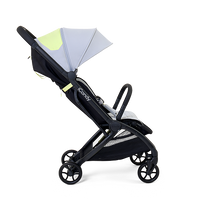
A stroller is an American term that is used to describe a lightweight version of a pushchair that is generally more compact and is designed for older babies or toddlers.
Often called umbrella strollers, they fold down slimly but can still be quite long when collapsed - so it’s worth checking your boot space! They’re especially popular for travel and holidays thanks to their lighter build.
If you’re buying one for trips, look for:
- Good sun protection
- A recline function for naps
- Compatibility with travel accessories like cup holders or bag clips

| A stroller is ideal for: | Age range | Benefits of a stroller |
|---|---|---|
| Babies (if the seat unit offers a lie-flat position) | 0-6 months (providing the seat unit offers a lie-flat position) +6 months |
|
| Toddlers | ||
| City dweller parents |

What is a buggy?
The term “buggy” is a general, informal term often used in the UK to describe a pushchair or stroller, usually something lightweight and easy to fold. In most cases, a buggy refers to a compact, everyday option suited to older babies or toddlers, rather than newborns.
Other Types of Prams and Pushchairs
If you need something more specific, there are several specialist options designed around different lifestyles, family sizes and ways of getting around.

What is a double pushchair?
A double pushchair is designed for two children, whether that’s twins or siblings of different ages. There are two main styles:
- Tandem: One seat in front of the other (narrower, easier through doorways and public transport)
- Side-by-side: Seats next to each other (wider, but often more balanced and equal for both children)
Many modern designs can convert from single to double, making them a flexible option as your family grows.
| A double buggy is ideal for: | Age range | Benefits of a double buggy |
|---|---|---|
| Twins | 0-6 months +6 months |
Ability to transport two children simultaneously |
| Toddler and baby |
What is a twin system?
A twin pushchair is specifically designed for twins of the same age, with equal seating for both children.
Most twin pushchairs are side-by-side, which keeps both children within view and ensures balanced weight distribution. Some models are ideal for newborns, with lie-flat seats or carrycot compatibility.
The main consideration is width, because while they offer symmetry and comfort, they can be harder to navigate through narrow spaces.
A twin pushchair is ideal for:
| Situation | Age range | Key benefit |
|---|---|---|
| Twins | 0 - 6 months | Equal comfort and support for both babies |
| Everyday use | 0 - 6 months+ | Balanced, easy-to-steer design |

What is a Tandem Pushchair?
Three-wheel pushchairs are designed to travel on all types of ground. The two wheels at the back provide stability, whilst the front wheel provides manoeuvrability. These wheels are generally large and robust and ideally will be removable to allow for easy cleaning after a muddy trek!
Often a three-wheel pushchair is designed for off-road usage, but like an SUV, will be just as at home in urban environments too. A three-wheel pushchair is generally made with the active parent in mind and is designed to take children across all terrains in comfort thanks to the excellent suspension and puncture-proof tyres.
A three-wheeled pushchair can be large, so it's important to check it will fit in your car boot or at home when folded.
| Situation | Age range | Key benefit |
|---|---|---|
| Baby and toddler | 0 - 6 months | Handles different ages in one pushchair |
| City living | 6 months+ | Narrow frame for tight spaces |
| Public transport | 6 months+ | Easier access through doors and aisles |
What is a travel system?
A travel system consists of a pushchair frame, upon which other parts can easily be fitted. These parts include a carrycot, seat unit and a rear-facing car seat and when they are purchased as a package, they often provide good value for money.
However, most travel systems allow you the option to buy the elements separately, should you wish not to purchase all the products together as a package. Most pushchair brands include compatible car seat adaptors in the travel system package enabling the infant car seat to easily be clipped onto the wheels so that a sleeping baby can be moved seamlessly from car to pushchair.
Many car seat manufacturers recommend that a baby should spend no longer than 2 hours (30 minutes for newborns) in a car seat within a 24 hour time period. The benefit of a travel system bundle is that it includes all the parts needed to grow with your baby- once the baby has outgrown the car seat and carrycot, the seat unit can be used.
| A travel system is ideal for: | Age range | Benefits of a travel system |
|---|---|---|
| First time parents | 0-6 months +6 months |
|
| Parents with cars |

What is a three-wheel pushchair?
Three-wheel pushchairs are designed to travel on all types of ground. The two wheels at the back provide stability, whilst the front wheel provides manoeuvrability. These wheels are generally large and robust and ideally will be removable to allow for easy cleaning after a muddy trek!
Often a three-wheel pushchair is designed for off-road usage, but like an SUV, will be just as at home in urban environments too. A three-wheel pushchair is generally made with the active parent in mind and is designed to take children across all terrains in comfort thanks to the excellent suspension.
Puncture-proof tyres are important when it comes to an all-terrain pushchair so that parents can take their pushchair on any adventure with confidence.
A three-wheeled pushchair can be large, so it's important to check it will fit in your car boot or at home when folded.
| A three-wheel pushchair is ideal for: | Age range | Benefits of a three-wheel pushchair |
|---|---|---|
| Active parents | +6 months |
|
What Pram Features Should You Be Looking For?
Alongside a changing mat and bottles, a pram is likely to become one of your most used baby products! It's also the item that you’ll use for the longest so it’s important to consider the finer details that will make everyday life as easy and comfortable for parent and baby. In this section of the Pushchair Guide, we list important things to consider such as comfortable seat padding for the baby and an adjustable handlebar for parents.

Choosing a Pram: What Matters for Your Baby
Alongside a changing mat and bottles, a pram is likely to become one of your most used baby products! It's also the item that you’ll use for the longest so it’s important to consider the finer details that will make everyday life as easy and comfortable for parent and baby. In this section of the Pushchair Guide, we list important things to consider such as comfortable seat padding for the baby and an adjustable handlebar for parents.
Facing Directions
Parent-facing mode makes it easy to check on your baby, while also helping them feel reassured by familiar faces and voices. It’s particularly useful in the early months when closeness and interaction are key.
As your baby grows, they’ll become more curious about their surroundings. At this stage, switching to world-facing can help support their development and engagement.
It’s best to make this transition gradually. If your pushchair allows easy switching, start with short periods of forward-facing to help your baby adjust without becoming overwhelmed.
Comfortable Padding and Support
Look for a pram with good padding and ergonomic support, especially for newborns. A well-cushioned seat or carrycot helps keep your baby comfortable on longer outings, while also supporting healthy posture.
Some pushchairs offer newborn inserts or additional supports, which can provide extra stability in the early months.
Ride-on Board Compatibility
If you have (or are planning for) more than one child, a ride-on board can be a useful addition.
These attach to the back of the pushchair, allowing a toddler to stand or sit when they get tired. Most are sold separately and can be clipped on or removed as needed. Some also include a small saddle for seated use.
Before buying, it’s worth considering how it affects your walking space and stride, as some boards can make pushing less comfortable. If available, an integrated ride-on board is often the most seamless option.
Pushchair Convertibility
Convertible pushchairs can switch from single to double, making them a practical choice if you’re planning to grow your family.
You can usually add a second seat unit or carrycot, either as part of a bundle or with additional adaptors. Many designs use a tandem layout, so they stay relatively narrow and easier to manoeuvre than side-by-side doubles.
They also offer multiple configurations, meaning they can work for twins or siblings of different ages.
One thing to check is basket space, as this is often reduced when a second seat is added, so it’s worth comparing between models.
Versatile and Durable Tyres
Depending on your lifestyle, your pushchair may be pushed over a range of different surfaces, including grass, pavements and bumpy terrain. When purchasing your pushchair, it's important to consider how it will be used.
All-terrain models are designed to handle a mix of conditions, offering more flexibility if you’re regularly outdoors. Look for tyres made with durable materials (such as PU/EVA combinations), which provide a smoother ride without the risk of punctures.
Suspension is just as important. Good suspension helps to:
- Absorb bumps
- Improve comfort for your baby
- Make steering easier for you
If you plan to use your pushchair beyond flat urban streets make sure it has strong and reliable tyres and good suspension.
Seat Position and Recline
A good pushchair should adapt to your baby’s needs as they grow.
For newborns, a lie-flat position is essential to support healthy development. As your baby gets older, an adjustable recline allows them to sit more upright while still having the option to nap comfortably.
Some models offer multiple recline positions, giving you more flexibility throughout the day.
Canopy Coverage
Canopy coverage provides shade while protecting your baby from the elements. Ideal for sunny strolls, windy weather and generally being out and about in the elements.
Look for:
- Extendable canopies for better coverage
- UPF/SPF-rated fabrics (often SPF 50+) for sun protection
- Ventilation panels or peek-a-boo windows for airflow and visibility
This is especially important for summer use or travel, where sun exposure is higher.
Car Seat Compatibility
If you’ll be travelling by car, it’s worth checking whether your pushchair is compatible with infant car seats.
Many models work with specific brands using adaptors, allowing you to attach a car seat directly to the frame. This makes it easier to move a sleeping baby from car to pushchair without disturbance.
If you’re considering a full travel system, check:
- Which car seats are compatible
- Whether adaptors are included
- Compatibility with ISOFIX bases, if you use one
This flexibility can make day-to-day travel much smoother, especially in the early months. You can find out more over on our car seat compatibility guide.