





The complete guide to prams and pushchairs
Expert-backed advice on every type of pram, pushchair and travel system, plus the features, accessories and safety points that matter. Built by parents, for parents.
The essentials, at a glance
A pram has a lie-flat carrycot for newborns, while a pushchair has an upright seat for babies who can sit up. A travel system combines both on one chassis, plus a compatible car seat, so you can move a sleeping baby from car to pushchair without waking them.
Choose a pushchair suitable from birth if you are buying for a newborn, meaning it offers a fully flat lying position. Match it to where you live: a compact, lightweight frame for city and public transport, or larger wheels for parks and rough ground.
Many iCandy chassis convert from single to double, so one purchase can grow with your family across several children.

Pram, pushchair, buggy, stroller: what is the difference?
With so many terms used interchangeably, it is easy to get confused. Although often used as synonyms, prams and pushchairs serve different stages of your baby's development: prams let a newborn lie flat, whereas pushchairs let an older baby sit upright. This section breaks down each type, including specialist options for different lifestyles, family sizes and ways of getting around, so you can quickly understand what each is designed for.

What is a pushchair?
A pushchair is ideal for older babies at around 6 months of age. A good way to judge if a baby is ready for a pushchair is if they are able to sit up unaided. A pushchair generally offers the option for the baby to be forward-facing too.

As seen with Molly-Mae
What is a pram?
Prams are designed for newborn babies and offer a modern take on the traditional baby carriage where the baby lies flat. A flat position is advised for newborn babies to aid with lung and spinal development.

What is a stroller?
A stroller is an American term used to describe a lightweight version of a pushchair that is generally more compact and designed for older babies or toddlers.
Often called umbrella strollers, they fold down slimly but can still be quite long when collapsed, so it is worth checking your boot space. They are especially popular for travel and holidays. If you are buying one for trips, look for good sun protection, a recline function for naps, and compatibility with travel accessories like cup holders or bag clips.

What is a buggy?
The term buggy is a general, informal term often used in the UK to describe a pushchair or stroller, usually something lightweight and easy to fold. In most cases, a buggy refers to a compact, everyday option suited to older babies or toddlers, rather than newborns.
View all pushchairs
What is a double pushchair?
A double pushchair is designed for two children, whether twins or siblings of different ages. There are two main styles: tandem, with one seat in front of the other (narrower, easier through doorways and public transport), and side-by-side, with seats next to each other (wider, but often more balanced for both children).
Many modern designs can convert from single to double, making them a flexible option as your family grows.
What is a twin pushchair?
A twin pushchair is specifically designed for twins of the same age, with equal seating for both children.
Most twin pushchairs are side-by-side, which keeps both children within view and ensures balanced weight distribution. Some models are ideal for newborns, with lie-flat seats or carrycot compatibility. The main consideration is width, because while they offer symmetry and comfort, they can be harder to navigate through narrow spaces.
What is a tandem pushchair?
A tandem pushchair has one seat in front of the other to create a more streamlined and narrow frame compared to side-by-side designs.
This makes tandems a practical choice for urban environments, where navigating doorways, shops and public transport can be challenging with a wider pushchair. Some tandem models are designed with different seat types, such as a carrycot plus seat, making them well suited to siblings of different ages. It is worth noting that the rear seat can sometimes have less visibility or legroom, depending on the design.
What is a travel system?
A travel system is essentially a pushchair frame onto which other parts can easily be fitted. These parts include a carrycot, seat unit and a rear-facing car seat, and when purchased as a package they often provide good value for money.
This lets you move your baby from car to pushchair without waking them. Most systems can be bought as a bundle or built separately, depending on your needs. Many manufacturers recommend limiting car seat use to around 2 hours per day, and less for newborns.
What is a travel pushchair?
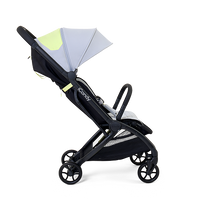
A travel pushchair is built for convenience on the move, with a focus on being lightweight, compact and quick to fold.
Many models fold down small enough for air travel, with some meeting airline cabin baggage requirements. They are also ideal for day trips, public transport and holidays, where space and portability matter.
What is a running or jogging pushchair?
A jogging pushchair is designed for active parents who want to run or exercise with their child. It is built for stability and control at higher speeds, with most having a fixed front wheel to keep the pushchair tracking straight, along with enhanced suspension to absorb impact on uneven ground. Safety features such as a hand brake and wrist strap provide extra control when running downhill or at pace.
They tend to be larger and bulkier than everyday pushchairs, so storage space is an important consideration. They are generally recommended for use from around 6 months, once your baby has stronger head and neck control.

What is a three-wheel pushchair?
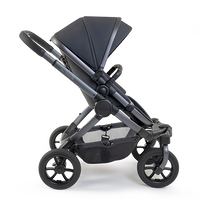
Three-wheel pushchairs are designed to travel on all types of ground. The two wheels at the back provide stability, while the front wheel provides manoeuvrability. The wheels are generally large and robust, and ideally removable to allow for easy cleaning after a muddy trek.
Often designed for off-road use but, like an SUV, just as at home in urban environments. Made with the active parent in mind, with excellent suspension and puncture-proof tyres. A three-wheeled pushchair can be large, so check it will fit in your car boot or at home when folded.
Choosing a pram: what matters for your baby
When choosing a pram or pushchair, your baby's comfort, safety and development should come first. From how they sit or lie to how supported they feel on the move, the right features make a big difference in those early months and beyond. A pram is likely to become one of your most-used baby products, and the item you will use for the longest.
Facing directions
Most from-birth pushchairs offer two seating options: parent-facing (rear-facing) and world-facing (forward-facing). Parent-facing makes it easy to check on your baby and helps them feel reassured by familiar faces and voices, which is particularly useful in the early months. As your baby grows and becomes more curious, switching to world-facing can support their development and engagement. Make the transition gradually, starting with short periods of forward-facing.
Comfortable padding and support
Look for a pram with good padding and ergonomic support, especially for newborns. A well-cushioned seat or carrycot helps keep your baby comfortable on longer outings, while supporting healthy posture. Some pushchairs offer newborn inserts or additional supports for extra stability in the early months.
Ride-on board compatibility
If you have, or are planning for, more than one child, a ride-on board can be a useful addition. These attach to the back of the pushchair, allowing a toddler to stand or sit when they get tired. Most are sold separately and can be clipped on or removed as needed. Before buying, consider how it affects your walking space and stride. If available, an integrated ride-on board is often the most seamless option.
Pushchair convertibility
Convertible pushchairs can switch from single to double, making them a practical choice if you are planning to grow your family. You can usually add a second seat unit or carrycot, either as part of a bundle or with additional adaptors. Many designs use a tandem layout, so they stay relatively narrow. One thing to check is basket space, as this is often reduced when a second seat is added.
Versatile and durable tyres
Depending on your lifestyle, your pushchair may be pushed over grass, pavements and bumpy terrain. All-terrain models handle a mix of conditions. Look for durable PU/EVA tyres for a smoother ride without the risk of punctures. Good suspension is just as important: it absorbs bumps, improves comfort for your baby and makes steering easier. If you plan to go beyond flat urban streets, make sure it has strong tyres and good suspension.
Seat position and recline
A good pushchair should adapt to your baby's needs as they grow. For newborns, a lie-flat position is essential to support healthy development. As your baby gets older, an adjustable recline lets them sit more upright while still napping comfortably. Some models offer multiple recline positions for more flexibility throughout the day.
Canopy coverage
Canopy coverage provides shade while protecting your baby from the elements, ideal for sunny strolls and windy weather. Look for extendable canopies for better coverage, UPF/SPF-rated fabrics (often SPF 50+) for sun protection, and ventilation panels or peek-a-boo windows for airflow and visibility. This is especially important for summer use or travel.
Car seat compatibility
If you will be travelling by car, check whether your pushchair is compatible with infant car seats. Many models work with specific brands using adaptors, letting you attach a car seat directly to the frame so you can move a sleeping baby from car to pushchair without disturbance. If considering a full travel system, check which car seats are compatible, whether adaptors are included, and compatibility with ISOFIX bases. Find out more in our car seat compatibility guide.
Understanding pram accessories
It is easy to overlook pushchair accessories, but they can make day-to-day life with your new addition a lot easier. When choosing your pushchair, check which accessories are included and which may be additional purchases. Some are optional, but some are essential.

Carrycot
A carrycot is a light, portable cot with a handle that attaches to the chassis of a pram. In a travel system it is the first configuration used, from newborn to around 6 months. If a pushchair does not have a lie-flat option, a carrycot is essential, as it allows newborns to lie completely flat, which is important for spinal and lung development. It features a hood for protection from the elements, and handles make it easy to take on and off the frame.

Rain cover
A pushchair rain cover is essential for keeping the baby dry as well as the fabric of the pushchair. Most pushchairs come with a tailored raincover to ensure an accurate fit. Car seat raincovers are also available.

Changing bag
Changing bags have come a long way and parents do not have to sacrifice style. They are available as satchels, backpacks or totes, so choose one that suits your lifestyle. Pushchair clips let you hang your changing bag from the pushchair. Most come with a detachable, washable changing mat, insulated bottle pockets and multiple pockets for organisation.

Parasol
A parasol is made from SPF/UPF 50+ fabric and attaches to the pushchair frame to provide shade and prevent overheating. Some pushchairs come with inbuilt sunshades and extendable SPF canopies. Most parasols attach using a clamp, so check whether the clamp is an additional purchase.
Footmuff
A footmuff is an accessory for colder weather. Look for a soft lining and a showerproof exterior. A seat liner and footmuff combination can be used year round, with the footmuff removed in summer and reattached in winter. Always ensure it is compatible with a 5-point safety harness.
Travel toys, blankets and seat liners
Travel toys attach to the bumper bar or hood and are great for long journeys; spiral toys wrap around bars and handles. A pram blanket usually measures around 70cm x 90cm and comes in many styles. A seat liner is not essential but adds comfort and protects the pushchair from crumbs and spills. A waterproof mattress protector and fitted sheets are recommended for most carrycots.
Pram safety considerations
You will typically rely on your pushchair every day, so safety and reliability are essential. Here is what to check before you buy.

Brakes
Pushchairs use different types of brakes, and the right one depends on your routine. A foot brake is the most common, simple and reliable for everyday use. A handle brake is useful in busy areas where you need to stop frequently. A hand (active) brake is typically found on jogging or all-terrain models for control at speed. Whichever you choose, make sure it is easy to engage and release, and test it regularly.

Safety harness
A five-point harness is the safest option. It secures your baby over both shoulders, around the waist and between the legs. It should fit snugly but comfortably, with enough adjustment as your child grows.

Weight limit
Most pushchairs have a maximum weight limit of 15kg, although some go up to 25kg. Choosing a higher weight limit can extend how long you are able to use the pushchair.

Locking mechanisms
All pushchairs include primary and secondary locks to keep the frame secure when open. Always double-check both are fully engaged before placing your baby inside. Folding mechanisms require two actions to prevent accidental collapse.
Safety standards and everyday use
Look for compliance with BS EN 1888, the UK safety standard for pushchairs, which means the product has passed rigorous testing. For day-to-day safety, avoid overloading handles or the hood with bags as this can cause tipping, do not exceed the storage basket weight limit, and keep an eye on wear and tear, especially on wheels and brakes.
Frequently asked questions
When can my baby go into a pushchair?
At around 6 months old your baby will be ready to move into a pushchair. Signs to look out for include when your baby can sit up unaided, when they can control their head and neck movements, and when they fit comfortably within the seat unit safety harness.
How long should a baby be in a carrycot?
Babies should be parent-facing in a carrycot from birth until around 6 months, or until they can sit up unaided, at which point they can progress into a seat unit. During the first 6 months it is best for babies to be parent-facing so there is plenty of interaction during important developmental months.
When can my baby sit up in a stroller?
If you plan to use a stroller with a newborn, it must recline to a lie-flat position and offer adequate head and back support. Most umbrella strollers are not appropriate for babies until aged 6 months or over.
How do I fold my pram?
Folding methods vary from brand to brand and pushchair to pushchair, so the fold is an important consideration. Think about whether you need a one-handed fold, how often you use public transport, and how much storage you have at home or in your car boot. There are several fold types including umbrella and half folds, and most brands demonstrate them via online video or in-store.
Can I take my pushchair on a plane?
Most airlines allow a pushchair as a free additional item, usually taken to the gate and stored in the hold during the flight. Some compact models can be taken on board as hand luggage, but this is not guaranteed, so always check airline policies in advance. A travel bag can help protect a checked-in pushchair, and it is worth bringing a baby carrier in case you need to hand it over earlier than expected.
Can my baby sleep in a pram overnight?
A pushchair carrycot can double up as a baby's first bed if approved to do so by the manufacturer, which avoids needing a separate Moses basket or crib. The mattress must be firm and clean, so if using a second-hand carrycot it is advisable to replace the mattress, use a waterproof protector and have plenty of fitted sheets.
When should I buy my pram?
There is no right or wrong time, but many parents buy in plenty of time so they can assemble and test it before the baby arrives. If you are buying a travel system bundle, purchase it ahead of the birth, as hospitals will only let the baby leave in a car seat. Also think about where you will store the pushchair beforehand, and if spreading the cost via a scheme like Klarna, plan that early.
Are 3 wheel prams safe to use?
All pushchairs in the UK should carry a safety label confirming the manufacturer, distributor and retailer. In principle there is no safety difference between three and four-wheel pushchairs, but as with any form of transport there are factors to consider. Regularly check the brakes, locking devices, safety harness and stability, and be mindful of the weight limit and any ride-on board limit.
Ready to find your perfect pushchair?
Explore our full range of pushchairs, prams and travel systems to compare styles, features and finishes all in one place.